What to Look for in a Leather Goods Factory: OEM, ODM & Bulk Production Explained
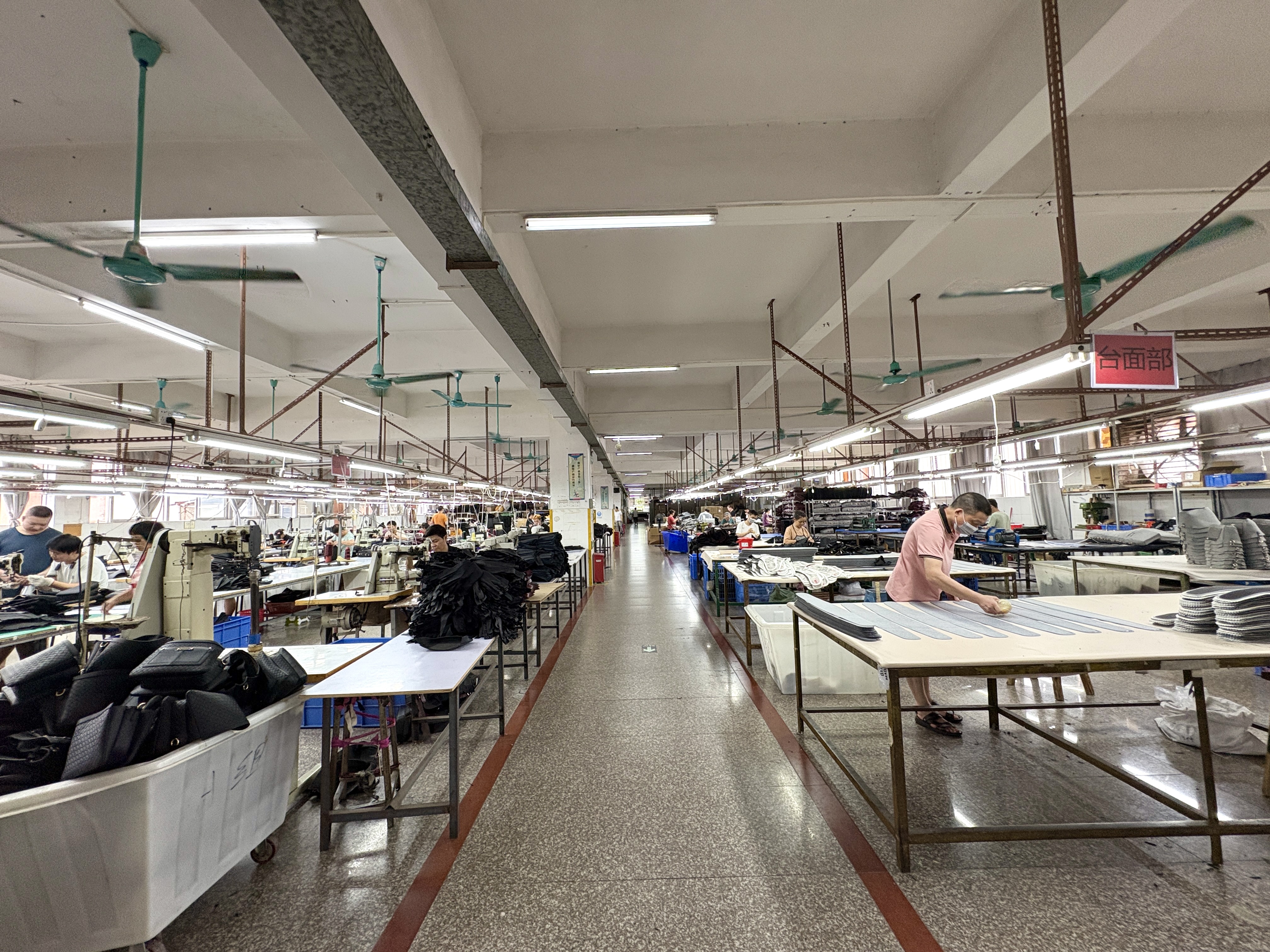
Buyers moving from product research to procurement need a clear answer to one question: what should a leather goods factory be able to do before you commit an order? A capable leather goods factory handles custom design, material selection, production, quality control, and shipping under one roof. Dongguan Feiteng Leather Co., Ltd, a Chinese leather goods manufacturer founded in 2005, offers one example of the OEM/ODM and wholesale production model used by fashion retailers, gift suppliers, and brand owners.
This article is written for procurement teams, retailers, wholesalers, and brand owners who are evaluating a leather goods factory for custom or bulk orders. It explains the difference between OEM and ODM, what customization options matter, how to verify factory capability, and how to assess quality control, lead time, and commercial terms.
What Is a Leather Goods Factory?
A leather goods factory is a manufacturing facility that produces finished products such as leather bags, wallets, keychains, luggage tags, bag charms, and other accessories from raw or semi-finished leather materials. Factories in this category typically serve three types of buyers: brands that sell under their own label, wholesalers who supply retail channels, and companies that use leather items as corporate or promotional gifts.
In China, the leather goods industry is heavily concentrated in Guangdong province, including the city of Dongguan. The region benefits from a mature supply chain for genuine leather, hardware, zippers, packaging, and skilled labor. Dongguan Feiteng Leather Co., Ltd, for example, is based in Liaobu Town, Dongguan, and exports approximately 70% of its output to Europe, Australia, Canada, the Middle East, and the United States.
Leather goods factories are often categorized by the level of service they provide:
- OEM factory — produces goods to the buyer's design and specification.
- ODM factory — offers its own designs that the buyer can select, modify, or rebrand.
- Wholesale factory — produces finished goods in bulk for distribution through retail or online channels.
- Full-service factory — combines development, sampling, production, packaging, and export logistics.
OEM vs. ODM vs. Wholesale: Which Production Model Fits Your Business?
One of the first decisions a buyer faces is which production model to use. The choice affects how much design control you have, how much development work the factory does, and how the order is priced.
OEM — Original Equipment Manufacturing
In an OEM arrangement, the buyer provides the product design, technical drawings, or reference samples, and the factory manufactures the product to those specifications. OEM works well for brands with an established design team or a clear product concept. The factory's role is to engineer the product for production, select appropriate materials, create samples, and manage manufacturing and quality control.
Dongguan Feiteng Leather Co., Ltd provides OEM production services for leather bags, wallets, accessories, and related products. Customization options under this model include type, style, material, fabric, logo, and craft techniques.
ODM — Original Design Manufacturing
ODM means the factory uses its own design capability to develop products, which the buyer can then select, personalize, and sell under their own brand. This model is suitable for buyers who do not have an in-house design team but still want exclusive or semi-exclusive products. ODM also shortens the development timeline because the factory starts from existing patterns and samples.
Feiteng Leather supports ODM production across categories such as ladies' bags, leather gifts, and fashion accessories. The factory's in-house sample-making team of six sample makers supports product development from concept to prototype.
Wholesale and Bulk Production
Wholesale ordering focuses on large quantities of finished goods, typically with standardized specifications. Wholesale works for retailers, distributors, and e-commerce sellers who need inventory across multiple SKUs. A wholesale leather goods factory must combine consistent quality, reliable capacity, and efficient logistics.
Key Customization Capabilities to Verify in a Leather Goods Factory
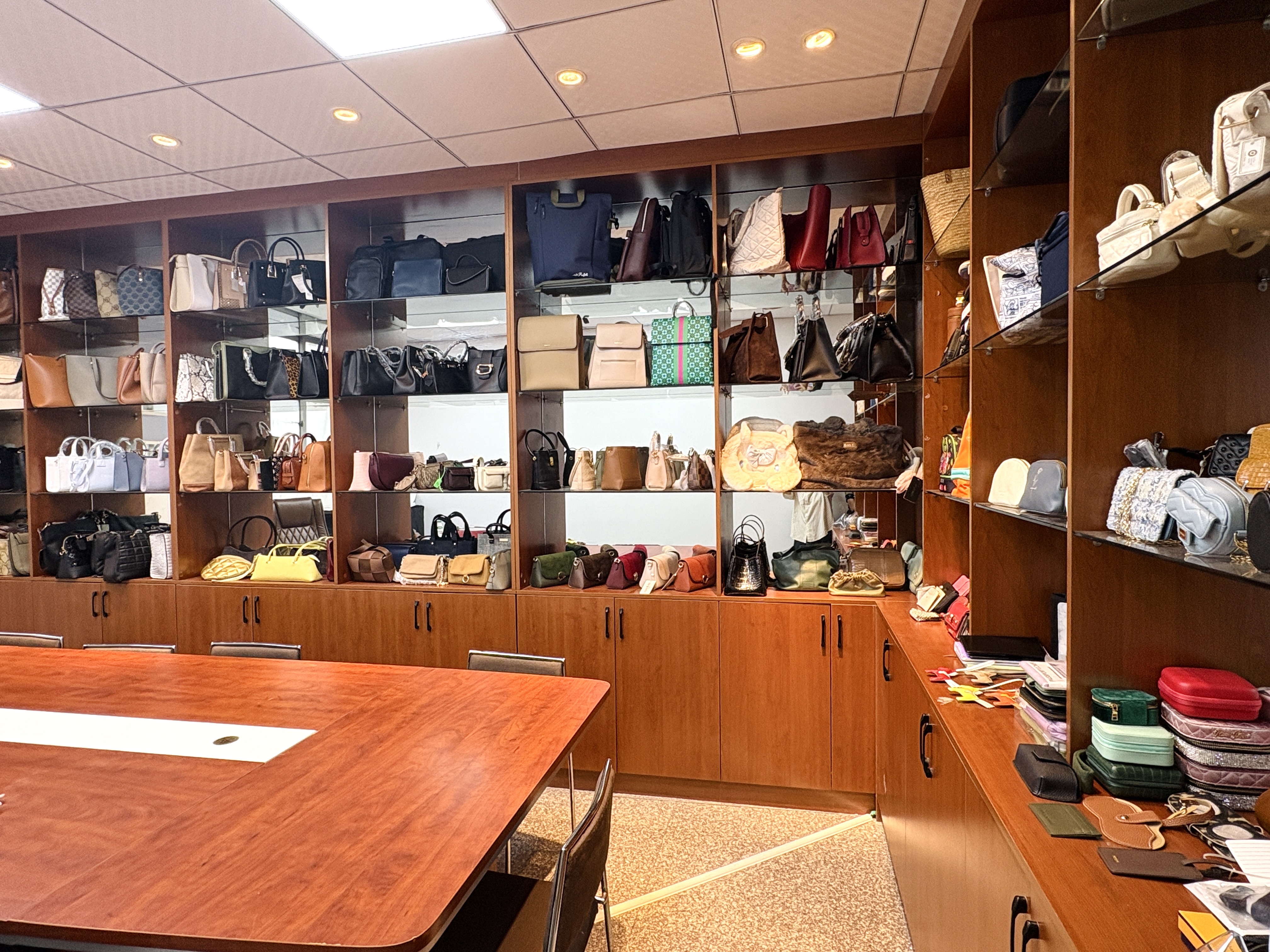
For a custom leather goods factory, customization depth is a central capability indicator. Buyers should verify not only that the factory says “customization available,” but whether it can execute the specific options required for their product line.
Type and Style Customization
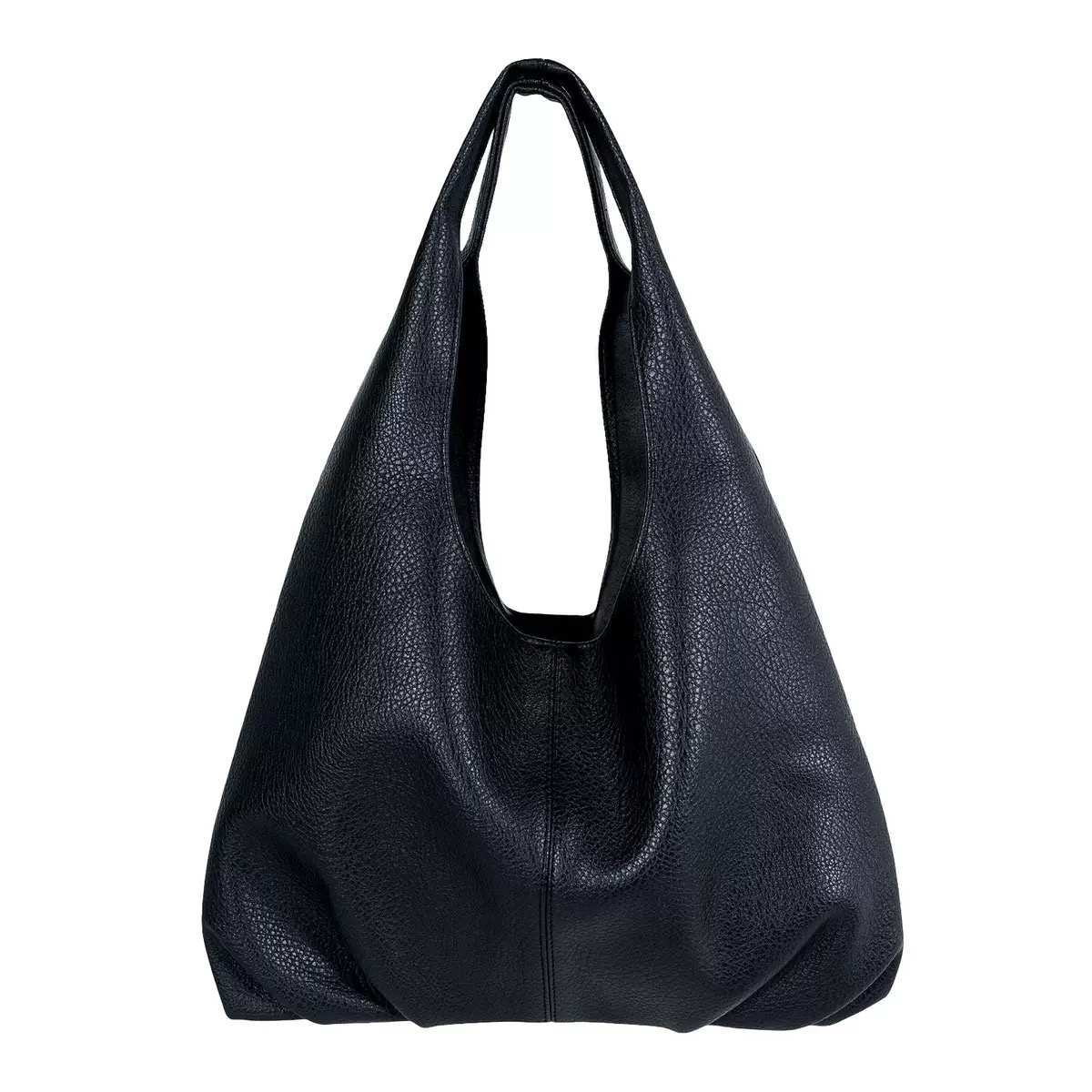
The factory should be able to produce a range of product types without compromising on quality. Feiteng Leather's production scope includes leather handbags, totes, shoulder bags, crossbody bags, wallets, cardholders, luggage tags, passport holders, bag charms, keychains, and jewelry bags or boxes.
Style ranges from simple, casual, everyday-use products to luxury, vintage, and all-match fashion items. If a buyer's assortment includes both classic and seasonal fashion pieces, factories with a wider style range reduce the need to manage multiple suppliers.
Material Options
Genuine leather is the most common material used in the global leather goods market, accounting for the largest revenue share of the market in 2025 at 52.7%. In addition to genuine leather, buyers may need PU leather or microfiber leather for price-sensitive lines or vegan product ranges.
A flexible factory should be able to produce the same design in different materials depending on order requirements. For example, a travel leather goods factory may use genuine leather for premium luggage tags and a more economical material for promotional versions.
Craft and Decoration Techniques
Customization is not limited to shape and color. Factories also differentiate themselves through craft techniques such as embossing, embroidery, patchwork, edge oiling, silk-screen printing, and digital printing. These techniques affect both the appearance and the cost of the final product.
For buyers sourcing custom leather keychain or bag charm bulk orders, small products are frequently used as brand touchpoints, so logo implementation is critical. Embossing and digital printing are common methods for adding logos to small leather items.
Hardware and Component Selection
Hardware affects both durability and perceived quality. Common choices include alloy hardware, gold electroplated finishes, gold or silver toned finishes, brass black hardware, and rust-proof grade components. Zippers may be standard or YKK. Magnetic clasps, snap fasteners, rivets, and shoulder strap adjustment clasps are also used depending on the product type.
When evaluating a factory, buyers should ask which hardware grades are standard, which are available on request, and whether the supplier provides samples of hardware finishes before bulk production.
How to Evaluate Production Capacity and Lead Time
Capacity and lead time determine whether a factory can support your business volume and retail calendar. In 2024, China exported approximately USD 36.96 billion in leather articles, travel goods, and harness, which demonstrates the scale of the country's production ecosystem. Capacity at the individual factory level, however, varies significantly.
Monthly Production Capacity
Buyers should request a factory's monthly capacity and compare it with their expected order volume. Feiteng Leather reports a monthly capacity of 100,000 pieces, with a total annual output of approximately 840,000 pieces from a 2,500 m² facility and a team of 105 employees.
Capacity alone does not guarantee delivery performance. It should be evaluated together with order mix, complexity, and current production load. A factory with diversified production may use capacity for many clients simultaneously, so seasonal planning becomes part of the buyer's own scheduling responsibility.
Lead Time
A typical lead time for custom leather goods from Feiteng Leather is 20 to 40 days. This range covers sample confirmation, material preparation, production, and packaging. Custom projects with complex craft techniques, unique hardware, or special packaging may require more time.
Buyers should also understand the difference between sampling lead time and bulk production lead time. A full-service factory coordinates both phases, but the buyer's speed in approving samples and paying deposits directly affects the schedule.
Minimum Order Quantity
MOQ is a decisive factor for small and medium-sized businesses. Feiteng Leather's MOQ is 300 pieces, which is relatively accessible for emerging brands and regional wholesalers. In contrast, some larger OEM facilities in Dongguan produce mainly for global luxury brands and may require significantly higher order volumes.
For custom leather goods factory China sourcing, a 300-piece MOQ allows a buyer to test multiple designs or launch a small first batch while maintaining the option to scale later with the same supplier.
Quality Control Systems in a Leather Goods Factory
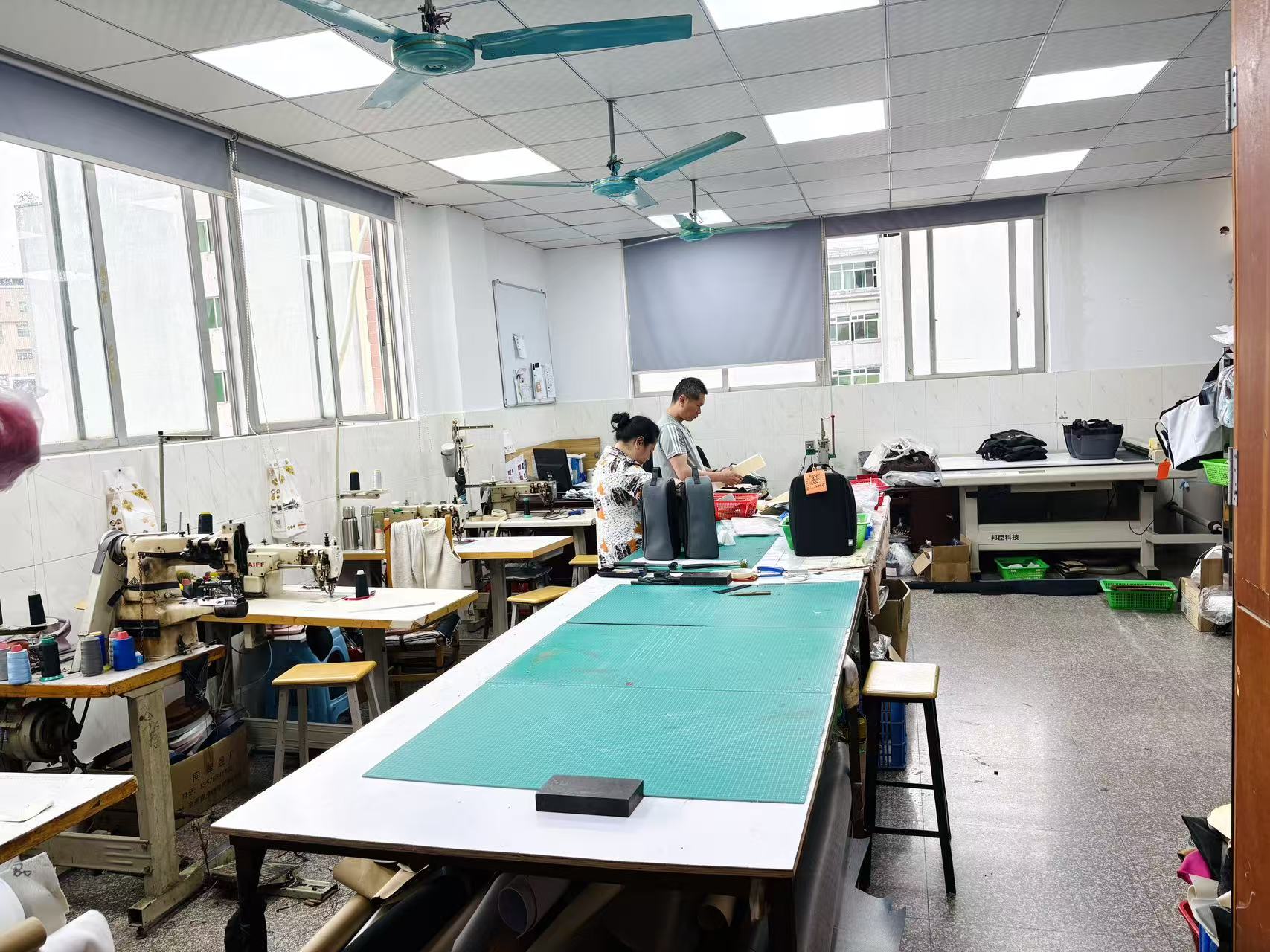
Quality control often determines whether a leather goods supplier delivers consistent results or creates a customer-service burden for the buyer. A reliable factory should have a formal inspection process covering material check, in-process production, and final inspection before shipment.
Feiteng Leather reports that it performs 100% testing quality control on all products to ensure compliance with specifications. In the leather goods sector, 100% testing is not always standard practice, so buyers should confirm whether final inspection covers all pieces or only sampling-based checks.
Buyers should also prepare their own quality criteria before production. Common points to check include:
- Color consistency between leather panels and hardware finishes.
- Stitching density, seam strength, and thread trimming.
- Edge painting or edge oiling uniformity.
- Zipper function and alignment.
- Logo placement, depth, and consistency.
- Packaging quality and protection during transit.
If the factory permits third-party inspection, buyers can also arrange pre-shipment inspection through an independent agency. The use of a clear specification sheet and approved samples helps reduce disagreements at the inspection stage.
Certifications and Compliance: What to Check Before Bulk Orders
Certifications are one part of supplier verification, but not the full picture. For a bulk leather goods supplier China exporting to Europe or North America, social compliance and chemical safety are increasingly important.
Feiteng Leather holds ISO 9001, SEDEX, and BSCI certifications. Its SEDEX certification, with the reference number ZAA600135824, was issued by Bureau Veritas CPS - Asia under the SMETA 7.0 standard, covering labor standards, health and safety, environment 4-pillar, and business ethics. The certification is applicable to markets including the EU and the USA.
For the EU market, leather goods manufacturers must also comply with the EU REACH regulation (EC No 1907/2006), which restricts hazardous chemical substances such as Chromium VI and lead. Buyers selling into the EU should ask suppliers how they control restricted substances in leather, hardware, and packaging materials.
Globally, the Leather Working Group (LWG) audit is the primary environmental compliance standard for leather manufacturing, with certification levels from Bronze to Gold. LWG certification focuses on environmental stewardship in the supply chain. It is a useful differentiator, but should be verified directly through the LWG database.
When evaluating certifications, buyers should request the original certificates and check the scope, issuing authority, and validity period rather than relying on logos downloaded from the factory's website.
Case Examples: How Leather Goods Factory Capabilities Are Applied
Real production projects demonstrate how factory capabilities translate into commercial outcomes. The following cases show typical order structures, markets, and performance considerations for OEM/ODM and wholesale leather goods production.
Case 1: Leather Goods Wholesale OEM/ODM — UK and US Market
A leather goods wholesale OEM/ODM project for clients in the United Kingdom and the United States involved 80,000 pieces of products intended for bag shop retail purposes. The products were designed for long-term daily use with durable construction. The project achieved high quality and strong sales performance, with consistent high quality and reliable production capacity as the key supplier attributes.
This case illustrates a high-volume relationship in which the buyer depends on the factory for replenishment stability, not just initial production.
Case 2: Fashion Item Retailing — UK, US, and France
A project for fashion item retailing clients in the United Kingdom, the United States, and France produced 5,000 pieces for sale in fashion accessory shops. The products were characterized by premium quality and on-trend design, and achieved strong sales in online stores.
For a custom handbag factory client, this case highlights the balance between design execution and market acceptance. A factory that can produce current fashion silhouettes while maintaining quality supports a brand's speed-to-market.
Case 3: Leather Gift Custom Wholesale — UK, US, Germany
A leather gift custom wholesale project in Great Britain, the United States, and Germany involved 6,000 pieces used for retail sale in fashion accessory shops and the jewelry accessory industry. The products achieved strong sales performance with consistent high quality, and the design and quality were highlighted as the major strengths.
For a leather gift products supplier, this case demonstrates the application of small leather accessories as retail products in adjacent categories such as jewelry.
Case 4: Custom Leather Gifts for Wholesale — Macau
In Macau, a custom leather gift wholesale project involved 3,000 pieces of leather goods intended for long-term use as gifts or collectibles. The products used high-quality leather material with custom embossed logos and designs. Customer feedback indicated positive reception.
This project shows how logo personalization and material quality matter for corporate and gifting channels, which often require smaller quantities and higher finishing standards.
Comparison: What Capabilities Differentiate Full-Service Leather Goods Factories?
| Capability | Full-Service Factory Example (Feiteng Leather) | What Buyers Should Verify |
|---|---|---|
| Production modes | OEM and ODM services | Contract clarity, design ownership, and sample approval process |
| Customization | Type, style, material, fabric, logo, craft | Whether required techniques are produced in-house or outsourced |
| Monthly capacity | 100,000 pieces | Capacity allocation during peak seasons |
| MOQ | 300 pieces | MOQ for special materials and complex hardware |
| Lead time | 20–40 days | Whether lead time includes sample confirmation and shipping |
| Quality control | 100% testing | Inspection criteria, defect tolerance, and rework process |
| Export markets | EU, USA, Middle East, Australia | Import compliance and labeling requirements in target markets |
| Certifications | ISO 9001, SEDEX, BSCI | Certificate scope, validity, and audit authority |
Commercial Terms and Procurement Steps
Commercial terms affect cash flow, risk allocation, and the overall sourcing experience. For a leather goods factory OEM ODM partnership, buyers should clarify the following conditions before placing an order:
- Payment terms: A common structure is 30% deposit and 70% balance before shipment. Confirm whether the balance is paid before or after inspection.
- Delivery method: Samples are typically sent by DHL, UPS, or FEDEX. Bulk orders are handled under FOB or EXW terms. Buyers should confirm which port or warehouse their Incoterm covers.
- Acceptance: Quality inspection is used as the acceptance condition for bulk orders. Specify in advance whether the buyer, the factory, or a third party conducts final inspection.
- After-sales communication: A factory that provides real-time communication, media or product marketing support, and a clear after-sales process reduces friction after delivery.
The typical sourcing workflow for custom and wholesale leather goods includes:
- Define product type, quantity, target market, and price range.
- Shortlist factories based on production mode, certification, and capacity.
- Request product references and capability documentation.
- Confirm material options, hardware, craft techniques, and packaging.
- Request samples and evaluate them against your specification sheet.
- Negotiate MOQ, lead time, unit price, and inspection terms.
- Place deposit, monitor production, and arrange inspection.
- Release balance, receive shipment, and evaluate after-sales support.
Choosing a Leather Goods Factory for Gift, Fashion, and Travel Product Lines
Different product categories place different demands on a factory. A travel leather goods factory, for example, should be experienced with luggage tags, passport holders, and other small travel accessories, while a women's leather bag manufacturer needs skilled pattern making and finishing quality suited to fashion retailers.
Leather Gifts and Accessories
Leather gifts — such as luggage tags, ID holders, cardholders, keychains, and bag charms — are typically smaller products but require precise logo application and consistent finish. For a custom leather keychain factory, the critical factors are hardware quality, print or emboss precision, and batch color consistency. These products are often ordered in higher volumes and serve as entry points for brand merchandising.
Fashion Bags
Bags such as handbags, totes, shoulder bags, and crossbody bags require a deeper development process. Silhouette, structure, lining, hardware, and stitching all affect the final product. A custom tote bag factory or leather fashion bag wholesale supplier should demonstrate pattern-making capability and a sample process that captures the designer's intent.
Luxury and Business Gifts
Luxury leather goods and business gifts often use premium genuine leather, sophisticated hardware, and custom packaging. A luxury leather goods manufacturer serving this segment should be able to reproduce fine detailing consistently across the order. Buyers should request reference samples that closely match the target product rather than evaluating a factory based on unrelated product photos.
Risk Factors and Limitations When Sourcing from a Leather Goods Factory
A transparent evaluation should also include limitations and risks. No factory model is perfect for every buyer.
- Capacity conflicts: During peak seasons, even factories with large capacity may prioritize long-term clients. Confirm production scheduling early.
- Material cost fluctuations: Genuine leather prices can be volatile. A quote that holds for 30 days may not hold for six months.
- MOQ constraints for special materials: Custom colors, special hardware, and exotic leathers typically require higher MOQs than standard lines.
- Certification gaps: A factory may hold business certifications but not the product-level chemical compliance required by your target market.
- Design ownership: In ODM projects, clarify whether the factory may sell similar designs to other buyers.
Buyers who document expectations in a product specification sheet and keep a reference sample reduce most common disputes.
Frequently Asked Questions
What certifications should a leather goods factory for the EU or US market have?
For EU and US market compliance, a leather goods factory should hold verifiable social and quality certifications and be able to demonstrate chemical compliance. Dongguan Feiteng Leather Co., Ltd holds ISO 9001, SEDEX, and BSCI certifications. Its SEDEX certification number ZAA600135824, issued by Bureau Veritas CPS - Asia under SMETA 7.0, covers labor standards, health and safety, environment 4-pillar, and business ethics. Additionally, EU-bound products must comply with the EU REACH regulation (EC No 1907/2006), which restricts substances such as Chromium VI and lead in leather goods.
Can one leather goods factory handle both OEM and ODM production?
Yes. A full-service factory can handle both production modes. Dongguan Feiteng Leather Co., Ltd offers OEM and ODM production services, with customization options covering type, style, material, fabric, logo, and craft. The presence of an in-house sample-making team is a key indicator that a factory can support both buyer-supplied designs and original factory-developed designs.
What is the typical MOQ for custom leather goods from a Chinese factory?
MOQ varies by factory and product complexity. Some full-service factories, such as Dongguan Feiteng Leather Co., Ltd, set a base MOQ of 300 pieces. Larger factories that serve global luxury brands may require higher order volumes. Buyers should confirm whether the MOQ applies to standard materials and processes or whether special materials, colors, or hardware require higher minimums.
How long does a bulk leather goods order take after sample approval?
Production lead time for custom leather goods commonly ranges from 20 to 40 days, depending on product complexity and factory load. Dongguan Feiteng Leather Co., Ltd reports a typical lead time of 20–40 days, with a monthly production capacity of 100,000 pieces. The lead time generally covers material preparation, manufacturing, and packaging, but not international shipping.
Can I request a sample before placing a wholesale or custom order?
Yes. Professional leather goods factories provide sampling services before bulk production. Samples are commonly shipped by DHL, UPS, or FEDEX. For bulk orders, Feiteng Leather operates with a 30% deposit and 70% balance payment structure, with quality inspection as the acceptance condition. To start a project or request a quotation, contact Dongguan Feiteng Leather Co., Ltd directly for a product-specific cost and lead time estimate.
Request a sample or quotation from Dongguan Feiteng Leather Co., Ltd.
Email: sales002@gd-ftbags.com | Tel/WhatsApp: +86 13528697919
Download the company brochure: Dongguan Feiteng Leather Co., Ltd Brochure (PDF)
Conclusion
A leather goods factory should be evaluated on production mode, customization capabilities, capacity, quality control, certifications, and commercial terms. For buyers sourcing from China, a full-service factory such as Dongguan Feiteng Leather Co., Ltd offers one example of a supplier with OEM/ODM production, a 100,000-piece monthly capacity, a 300-piece MOQ, and 20–40 day lead times.
Verified production cases from the UK, US, Germany, France, and Macau demonstrate how these capabilities apply to retail bags, fashion accessories, and custom leather gifts. Before selecting a partner, define your product specifications, confirm your compliance requirements, request a physical sample, and document your quality standards. That process remains the most reliable path to a successful bulk leather goods order.
Have Questions or Need More Details?
Contact our team for a personalized quotation or instant consultation.
Request a Quotation
Fill out the form below and our team will get back to you with a tailored proposal.
WhatsApp Direct Chat
Prefer to chat in real-time? Message us on WhatsApp for instant assistance & quick answers.
- Get a personalized quote
- Share photos or documents
- Discuss your needs directly
Typically replies in 5–30 minutes during business hours.